
- An agent helps your end-users complete actions based on organization data and user input.
- Agents orchestrate interactions between foundation models, data sources, software applications, and user conversations.
- In addition, agents automatically call APIs to take actions and invoke knowledge bases to supplement information for these actions.
- You don’t have to provision capacity, manage infrastructure, or write custom code. Amazon Bedrock manages prompt engineering, memory, monitoring, encryption, user permissions, and API invocation.
Reference Link: https://docs.aws.amazon.com/bedrock/latest/userguide/agents.html
How Agents Work
When an agent is given a task it has to develop a plan and execute that plan.
Reference Link: https://docs.aws.amazon.com/bedrock/latest/userguide/agents-how.html
Build-Time Configuration
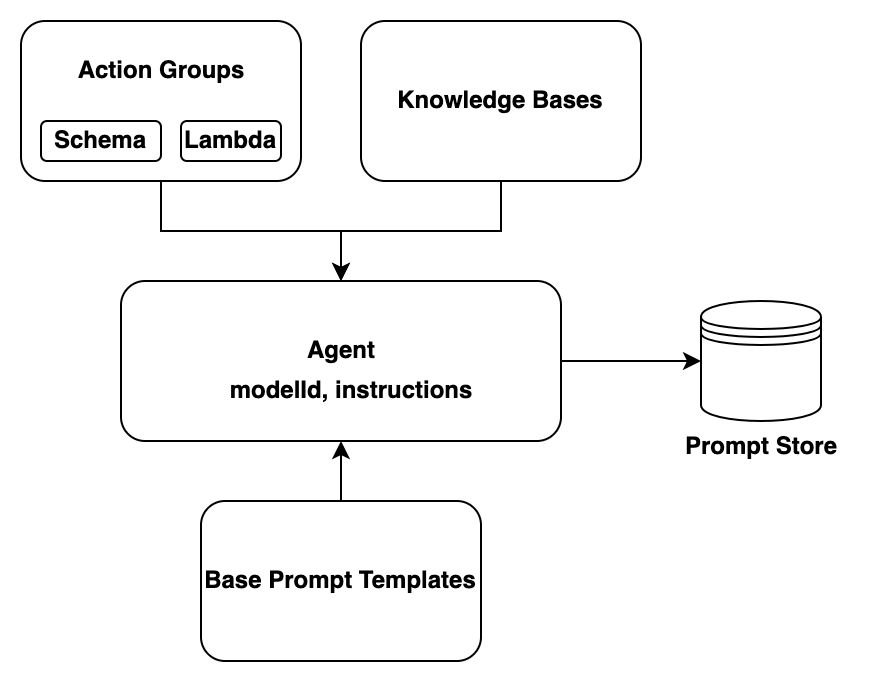
Runtime Process
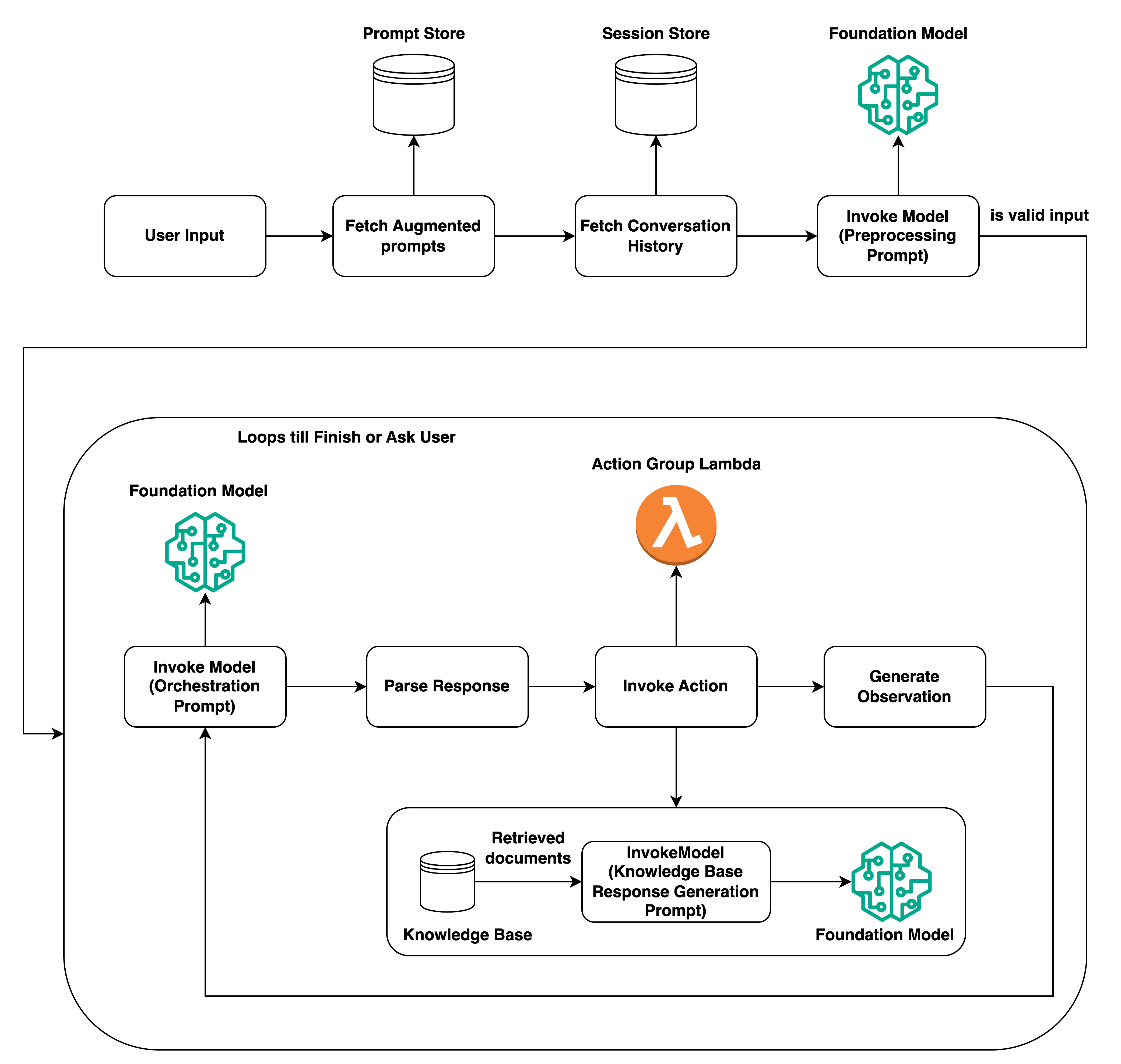
Orchestration Strategy
The orchestration strategy generally relies on the prompts sent to the model to create the plan and give the appropriate actions to solve the user’s request.
By default, agents use the orchestration strategy defined in the base default prompt templates.
The default orchestration strategy is ReAct or Reason and Action which makes use of the foundation model’s tool use patterns where applicable.
Reference Link: https://docs.aws.amazon.com/bedrock/latest/userguide/orch-strategy.html
Advanced Prompting
Reference Link: https://docs.aws.amazon.com/bedrock/latest/userguide/advanced-prompts.html
Custom Orchestration
Reference Link: https://docs.aws.amazon.com/bedrock/latest/userguide/agents-custom-orchestration.html
Custom Lambda Parser
Reference Link: https://docs.aws.amazon.com/bedrock/latest/userguide/lambda-parser.html